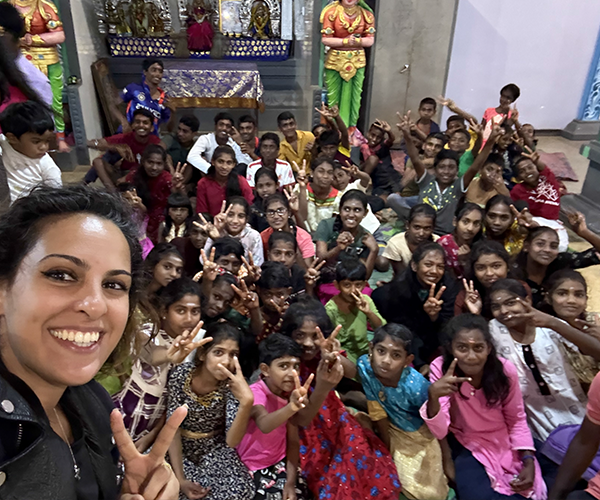
1 – Educational Support for Children
Our vision is to help break the cycle of poverty and limitation. Tea estate workers and their families are often trapped in cycles of poverty, limiting opportunities for education and employment. Infinite Grace Foundation aims to break this cycle through targeted interventions.
Establish Community Learning Centers in tea estates to improve English, Math, and Science education for G.C.E. O/L exams as the fail rates for these three subjects are high.
Failing G.C.E. O/L exams often leads to depression, substance abuse, and alcoholism, trapping children in cycles of poverty and addiction. Education provides a pathway to higher opportunities, breaking this destructive cycle.
Offer subsidized after-school programs focused on G.C.E. O/L preparation. Conduct workshops on dignity, ethics, and emotional regulation to support emotional well-being and teach financial literacy.
Increase G.C.E. O/L pass rates by 30% by 2028. Prevent the escalation of poverty and addiction, enabling children to build better futures.
2– Vocational Training for Workers
Provide subsidized vocational training in Hospitality, Sewing, Beeralu lace, Carpentry and IT skills to workers in tea estate communities.

Provide subsidized vocational training in Hospitality, Sewing, Beeralu lace, Carpentry and IT skills to workers in tea estate communities.
Limited access to skill development opportunities traps workers in low-paying jobs and perpetuates the cycle of poverty and drug use. Training equips them with marketable skills, improving employability and household incomes.
Collaborate with local employers to facilitate job placements for trained workers. Subsidize training fees to ensure the program is accessible to all. Integrate dignity, ethics, and RISE along with financial literacy and basic business skills.
Train 1,500 workers annually by 2027. Increase household incomes in tea estates by 20%, reducing financial strain and uplifting communities.